
La Salle County Criminal Court Cases
La Salle County criminal court cases split among several custodians. The 81st and 218th Judicial District Courts hear felony prosecutions, and the combined County/District Clerk records their proceedings and judgments. The constitutional County Court handles its assigned Class A and Class B misdemeanor work. Four justice courts keep fine-only offenses, magistrate matters, citations, and warrants within their own precinct files. A municipal citation, when one applies, stays with that city court. This map matters because a search at the wrong desk can yield no result even when a case exists elsewhere.
The 81st and 218th District Courts publish an official court site and docket material. Its source view shows where district settings enter the public record.
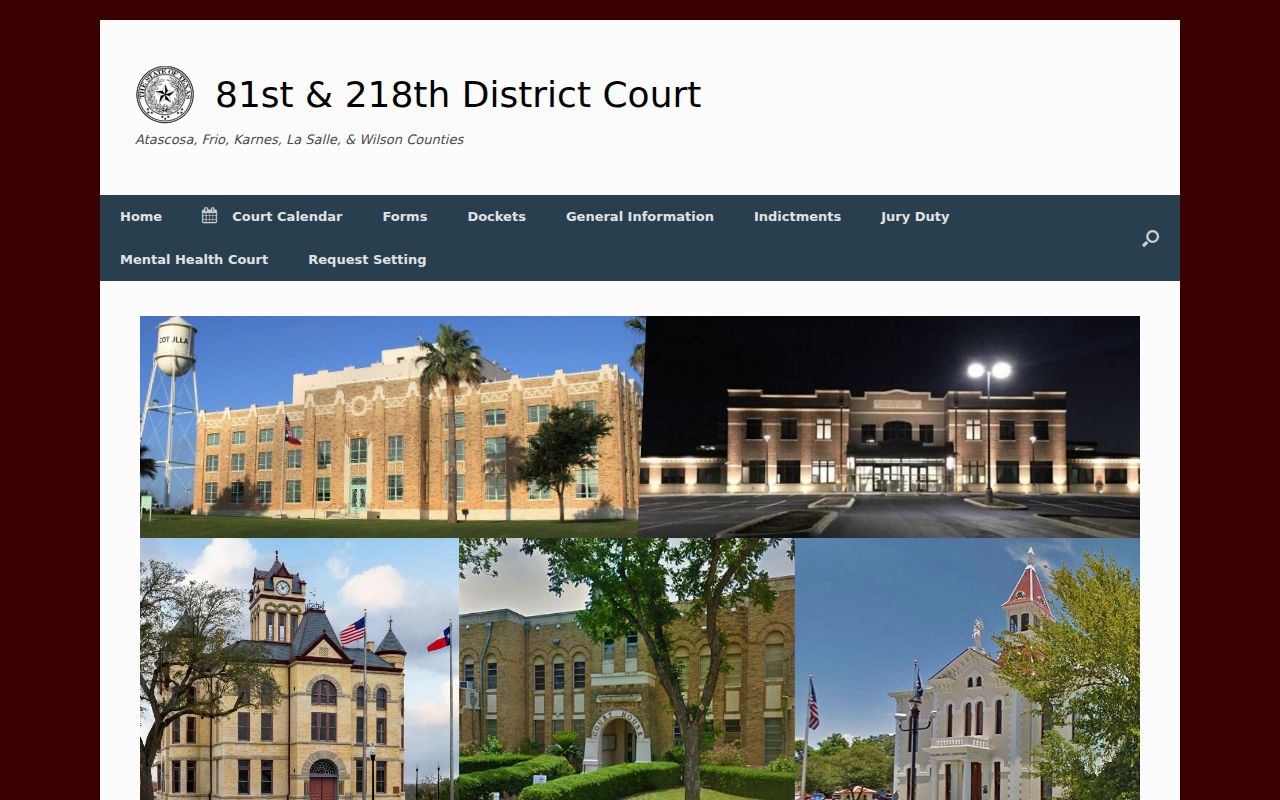
The court site is a useful schedule source, but the combined clerk remains the custodian for the filed La Salle County criminal case record.
La Salle County Criminal Court Levels
Start with the charge class. A felony points to the district-clerk side of the combined office. A Class A or B misdemeanor points to the county-clerk side and County Court. A fine-only Class C matter points to the named justice or municipal court. La Salle County has JP offices in Cotulla, Encinal, and Fowlerton, so the courthouse index is not a master index of every citation. The filing court, cause number, and filing date are stronger identifiers than a name alone.
| Court or custodian | Criminal role | Local contact |
|---|---|---|
| 81st and 218th District Courts | Felony prosecutions | Combined clerk, 101 Courthouse Square, Cotulla |
| La Salle County Court | Assigned Class A and B misdemeanors | County clerk at the courthouse; county judge office (830) 483-5139 |
| Justice Court Precinct 1 | Fine-only offenses and magistrate work | 212 Center St.; (830) 202-3051 or (830) 879-4456 |
| Justice Court Precinct 2 | Fine-only offenses and magistrate work | 502 Nopal St., Encinal; (956) 948-5086 |
| Justice Courts 3 and 4 | Precinct fine-only cases | JP3: (830) 879-4128; JP4: (830) 202-0096 |
The district court indictment index offers another official view of felony charging activity.
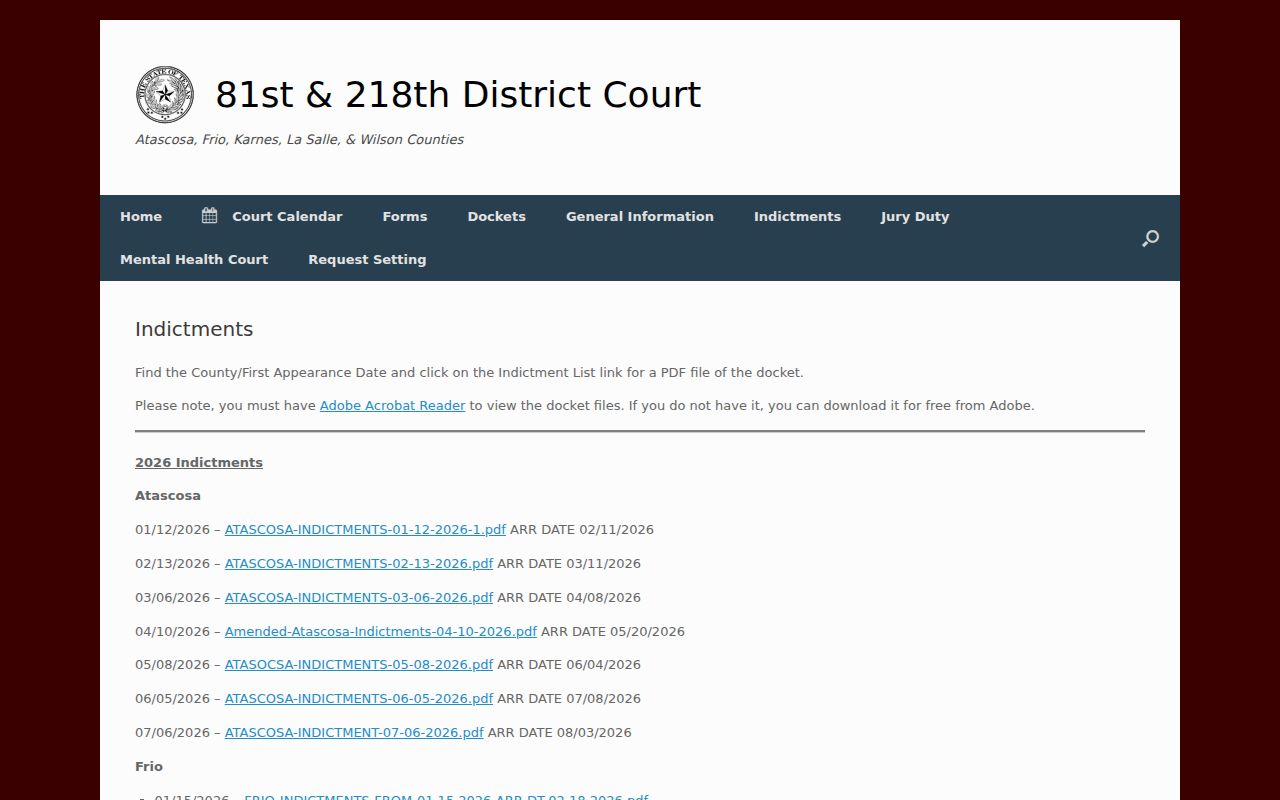
An indictment is a charging instrument, not a conviction, and the later docket and signed judgment supply the outcome.
Searching La Salle County Case Records
No complete, free Texas portal replaces the local filing clerk. The best La Salle County criminal case search therefore begins with the court level and ends with a clerk copy when the result matters. Older or nondigitized files may require a paper index or archive pull. Current local criminal copy and certification fees were not published in the reviewed official sources, so ask about price, delivery, and accepted payment before ordering.
- Classify the matter as felony, Class A or B misdemeanor, or fine-only citation, then contact the matching district, county, JP, or municipal clerk.
- Give the cause number when known. Otherwise provide the full name and a narrow filing-date range, then ask which identifiers the clerk can accept.
- Request the register or docket sheet first. Use it to identify the charging paper, hearings, motions, orders, judgment, and sentence.
- Check re:SearchTX as a supplement, but do not treat an empty result as proof that La Salle County has no criminal case.
- Ask the filing clerk for a plain or certified copy of the key signed document and confirm whether electronic delivery is available.
The official re:SearchTX platform shows the search interface and its available controls.
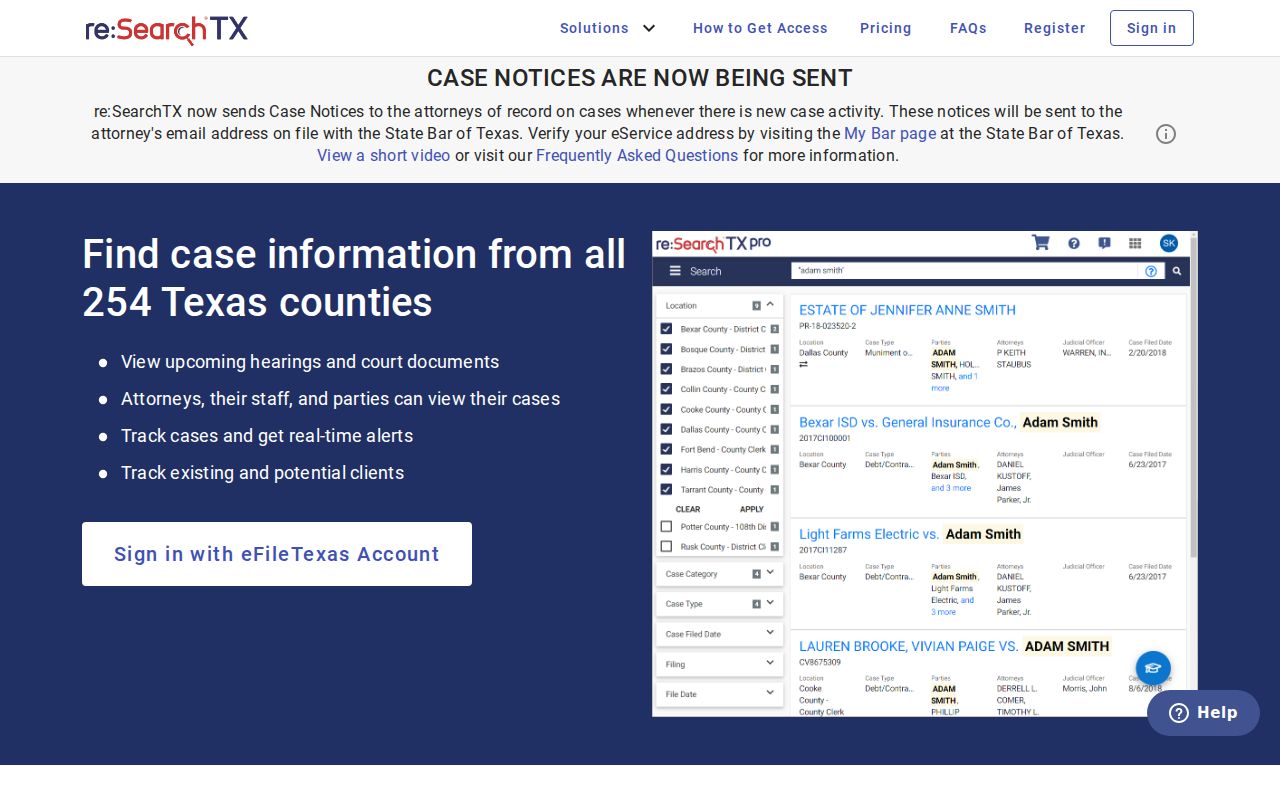
Coverage depends on the participating clerk and access rules, so this screen is a lead rather than a complete La Salle criminal index.
La Salle County Case Search Limits
re:SearchTX lets registered users search cases, filings, text in documents, and hearings. Available filters can include county, court, case, party, filing, document, or hearing data. Results may expose case details, parties, attorneys, events, filings, documents, and hearing information. The key local limit is more important than the feature list: official Texas materials state that the platform is not a complete statewide criminal-history search, and the Office of Court Administration still sends trial-record searchers to the proper clerk.
| Search control | Type | Use and limit |
|---|---|---|
| Search | Text | Keyword entry for the selected search area |
| Cases | Search menu | Case details where a participating clerk supplies access |
| Filings and documents | Search menu | Filed items that are electronic and public |
| Hearings | Search menu | Setting information that may change |
| County and court | Filters | Narrows results but does not cure missing criminal coverage |
The Texas court records FAQ states the statewide limitation and directs readers to the clerk.
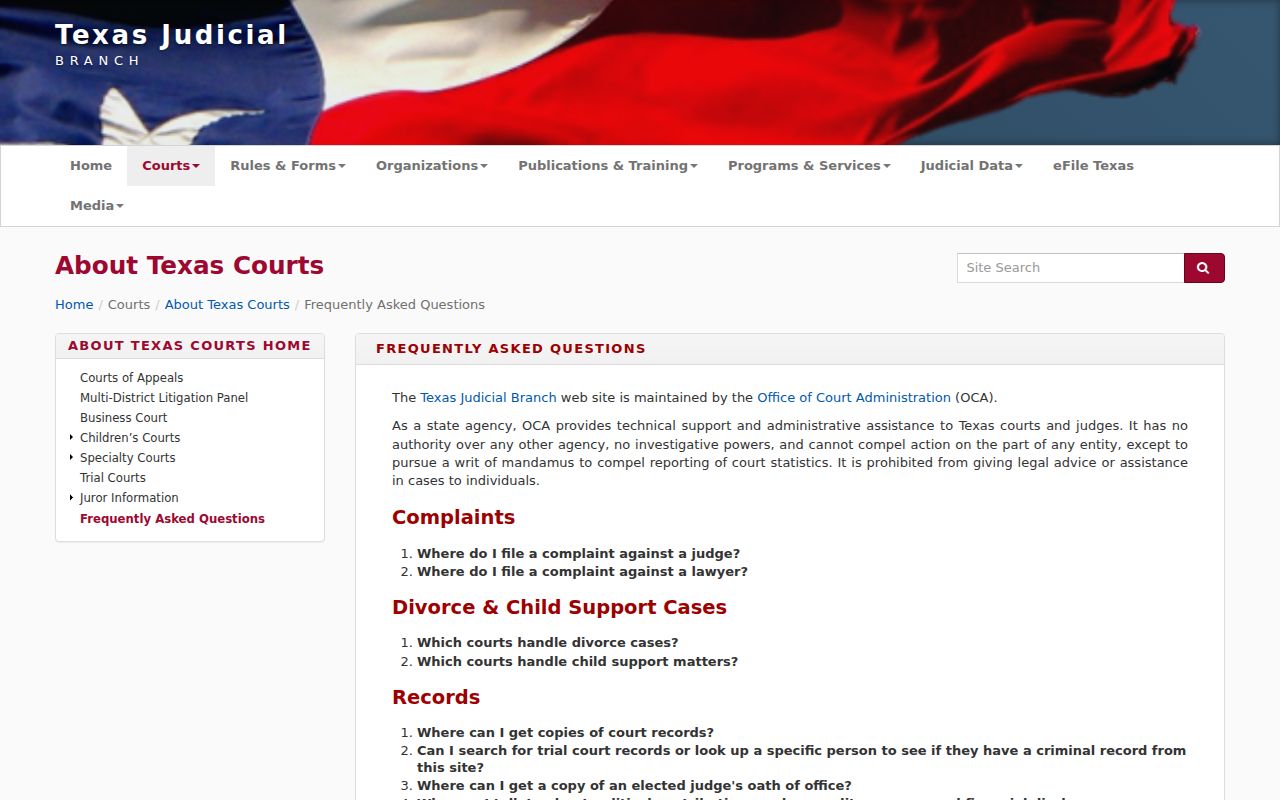
That guidance explains why a clerk call belongs in every sound La Salle County criminal case search.
Inside a La Salle County Case File
A La Salle County criminal case file is the record of one prosecution. The cause number and court identify the file. A complaint, information, or indictment states the accusation. Docket entries track settings and filed actions, while signed orders establish what the judge ruled. The judgment and sentence are the strongest sources for the disposition and punishment. Party and victim identifiers can be redacted when law requires, and a public screen may expose less than the clerk-held file.
| Cause Number and Court | The local file key, court level, and judicial assignment. |
|---|---|
| Charging Document | The complaint, information, or indictment and the filed charge, statute, and level. |
| Docket Entries | Settings, appearances, motions, orders, and other recorded events. |
| Hearing Dates | Past and scheduled proceedings, subject to later change. |
| Disposition and Judgment | The signed outcome, such as conviction, dismissal, acquittal, or deferred adjudication. |
| Sentence and Conditions | Custody, community supervision, fines, restitution, and other terms stated in the order. |
Note: A docket line is a useful index entry, but a certified signed judgment is stronger evidence of the final outcome.
La Salle County Felony File Sources
The 81st Judicial District Attorney prosecutes adult felony matters across a five-county district that includes La Salle County. Its office is not the clerk and does not replace the public court file. Prosecutor material can also include work product or protected victim information that never enters the public docket. For a filed indictment, court setting, plea, judgment, or sentence, the combined clerk and the district court docket remain the sound sources.
The 81st Judicial District Attorney site identifies the district prosecution office and its broader service area.

Districtwide totals should never be read as La Salle County-only case counts, but the site helps distinguish the prosecutor from the clerk who keeps the court record.
How a Criminal Case Moves
A local case can start with an arrest or summons, then move through prompt magistrate warnings, bond, and probable-cause review. The prosecutor reviews the charge. An information may charge an eligible misdemeanor, while a grand jury may return a felony indictment. Arraignment records the plea. Discovery, motions, and negotiations follow before a plea or trial resolves the accusation. The judgment and sentence complete the trial-court phase, subject to motions and appeal.
Case flow: Charges Filed › Arraignment › Pretrial › Plea or Trial › Disposition › Sentencing
Texas law generally requires an arrested person to be taken before a magistrate without needless delay and no later than 48 hours after arrest. That early hearing belongs to the path, but it is not the final La Salle County criminal court outcome.
Reading La Salle County Case Outcomes
Short docket labels can hide major legal differences. A dismissal ends a charge without a conviction but does not by itself erase the arrest. An acquittal is a not-guilty result after trial or an equivalent ruling. Deferred adjudication places a person on community supervision after a plea without an immediate conviction judgment. A conviction is a judgment of guilt. A grand jury no-bill means it declined to return an indictment, while a true-bill means it did return one.
- Disposition
- The outcome or status that resolves a charge or case.
- Nolle prosequi
- The prosecutor's formal choice not to proceed with a charge at that time.
- Deferred adjudication
- Community supervision imposed after a plea without an immediate conviction judgment.
- Judgment
- The court's signed statement of the result and, when applicable, guilt and sentence.
The Texas Penal Code punishment chapter supplies the official offense-level ranges.
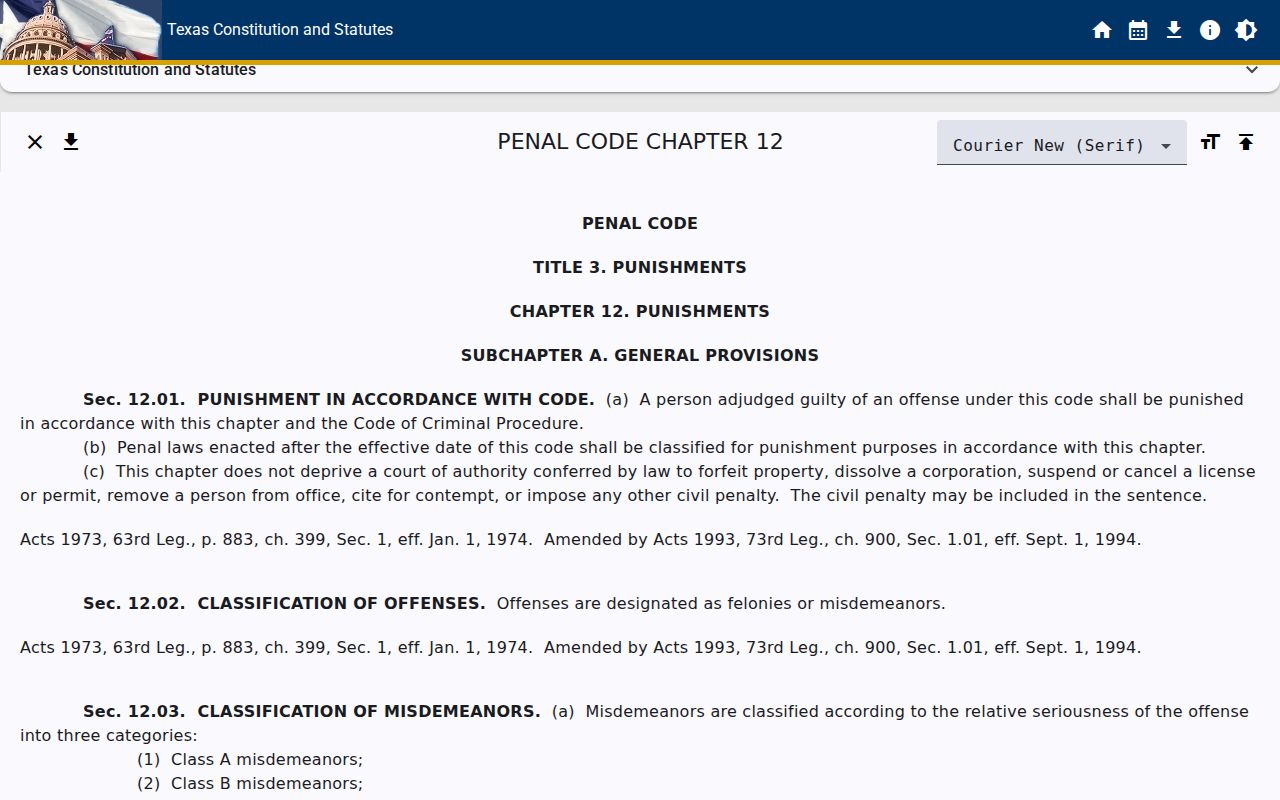
The filed charge and final judgment control in the individual La Salle County case, especially when enhancements may change the operative level.
Case Record Access & Restrictions
Court case files do not follow the same request path as sheriff records. Texas Rule of Judicial Administration 12 applies to judicial administrative records, while filed case records are requested from the clerk under court-record access law and common law. The Texas Public Information Act is not a mechanical substitute for that process. Ask the filing clerk for the public docket, specific documents, and segregable portions when part of a record is protected.
Juvenile records, protected victim details, personal identifiers, sealed material, expunged records, and nondisclosed criminal-history data can be withheld or redacted under Texas law.
A public online view may omit protected data or documents available only after clerk review. If a La Salle County criminal case does not appear, confirm the court level, spelling, date range, and archive status. For broader context after an arrest, the La Salle County arrest lookup explains the separate sheriff and booking records. Keep the two record types distinct: the clerk file proves what occurred in court, while a booking file proves custody occurred.